Up next in 10


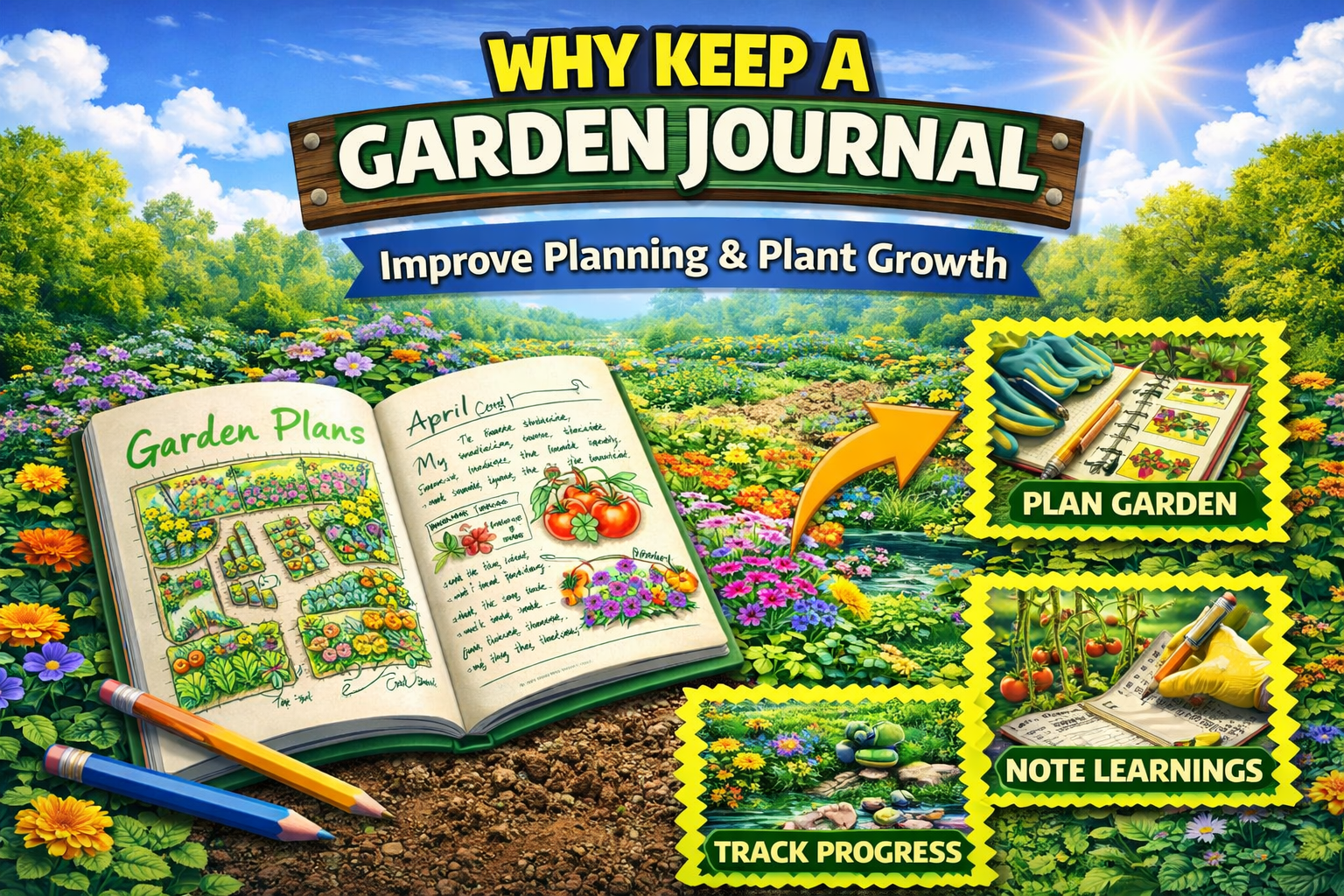
This video explains why keeping a garden journal can improve plant growth and overall gardening success.
It covers recording planting dates, tracking weather, noting successes and failures and planning future crops. You’ll also learn how simple record keeping helps identify patterns, avoid repeated mistakes and improve harvests.
Writing things down makes gardening easier to manage and more productive over time.
These tips apply to vegetable gardens, flower beds, raised beds, containers and small gardens.
Show More Show Less View Video Transcript
0:00
Why should we make a garden journal?
0:03
Welcome to Gardening with Ben. Today I'm
0:05
going to talk about why you should have
0:06
a garden journal. I've definitely got
0:08
one and obviously I share my progress on
0:12
social media, so I keep a journal that
0:14
way as well. The reason why we should
0:17
have a garden journal is because it
0:19
helps you remember when you've planted
0:21
it and when you've planted it, dates of
0:23
sewing, planting, and transplanting.
0:26
Which varieties have you've used? If you
0:28
get a good crop from something,
0:31
you might want to remember that one to
0:34
grow again next year. Or if something's
0:36
done terribly, you can say, "I'm not
0:38
going to do that one next year." So,
0:40
it's good to keep a log of what you've
0:42
actually grown. Write down what grew
0:44
well and what didn't. And then you can
0:46
obviously you can make that decision
0:48
whether you grow it again next year or
0:50
not. It saves all the guessing next year
0:53
when you're deciding what to sew again
0:55
in your a lotment.
0:58
It tracks your garden wins and mistakes.
1:01
What pests showed up and when they
1:03
showed up so that you know how to tackle
1:05
those pests, which fertilizer or feed
1:08
worked best on your vegetables,
1:11
weather patterns and frost dates. It's
1:13
good to make track of when you get hot
1:16
weather, when the frost comes, and when
1:19
it might have rained a lot. So, it's
1:20
good to keep track of all them. And
1:23
lessons you've learned you'd forget
1:25
otherwise.
1:27
So great to track your wins and your
1:29
losses.
1:31
Makes planting future seasons so much
1:34
easier. Refer back to last year's
1:36
timings of when you've sewn your seeds
1:38
and how you've grown them. Adjust your
1:40
sewing calendar accordingly to how
1:42
things grown well and how things
1:44
haven't. Spot gaps in the garden and
1:47
plant around them.
1:52
Perfect for tracking your harvest as
1:54
well. track how much you've harvested,
1:57
which plants were most productive, when
2:00
things started cropping on your a
2:02
lotment. It helps you to choose better
2:04
varieties for better yields next year.
2:09
It's also great for budgeting and saving
2:11
money. Track what seeds you bought, what
2:13
you used versus what you wasted. Do you
2:16
actually use a full packet of seeds when
2:18
you sew? I know I usually do. I never
2:20
leave some in a packet for the year
2:21
after. I end up using them all. It helps
2:24
you avoid buying duplicates as well.
2:26
I've got a massive seed bag full of
2:28
different seeds and a lot of them are
2:30
duplicates. So, it does cut down on it
2:32
if you do make note of what you've
2:34
actually got. Spot bargains and what
2:37
actually paid off. I'm always a bargain
2:39
hunter as you know. If I see a bargain,
2:41
I'll certainly fight it.
2:44
It's a mindfulness boost as well.
2:46
Reflecting on your garden helps with
2:49
reducing your stress. make notes of your
2:51
appreciation for your slow progress and
2:54
it turns your gardening into a positive
2:56
daily habit
2:59
and you build your own personal growing
3:01
guide as well. Obviously, there's plenty
3:03
of books out there to follow and
3:04
everything, but it's what grows best in
3:07
your soil or in your area over the
3:10
temperatures. After a few months, it
3:12
becomes a resource of unique to your
3:14
plot, tailored to your soil, your
3:16
weather, your climate, and something you
3:19
can keep for years and look back on when
3:21
you're planting up next year.
3:25
It also keeps your a lotment more
3:27
organized. You can write your job lists
3:30
down. I always have a job list and I
3:32
tick off when I've completed it and when
3:34
I plan on doing it. and it keeps you
3:36
more organized and you're not rushing to
3:38
do everything all at once. You can write
3:41
down your seasonal tasks and your tips,
3:43
what I provide you. Obviously, I tell
3:45
you what to do each month. Write them
3:47
down, tick them off, and complete them.
3:49
And then you know you've got everything
3:51
done. You can write your seed
3:52
inventories down. So again, you can
3:54
write down what seeds you've got and
3:55
what you need to get. And you can draw
3:58
your sketches of your plot as well. You
4:00
can make your layout and plan how things
4:03
are going to grow. And then you can look
4:04
back next year and do the crop rotation
4:07
so that you don't plant stuff in the
4:08
same place next year.
4:11
Looking back at photos and notes helps
4:13
you with so much on your a lotment and
4:17
seeing how far that you've actually come
4:19
and it creates memories and a history of
4:21
your plot as well. So I hope you found
4:24
them tips useful. If you've not got a
4:26
seed journal, have a look around.
4:27
There's plenty online and yeah, start
4:30
making a journal of your garden and a
4:32
lotment and seeing how well you progress
4:35
with using one. So until next time
4:37
everyone remember keep smiling, keep
4:39
shining and keep gardening with B
4:41
everyone.
Hobbies & Leisure
Home & Garden
Home & Garden