Up next in 10



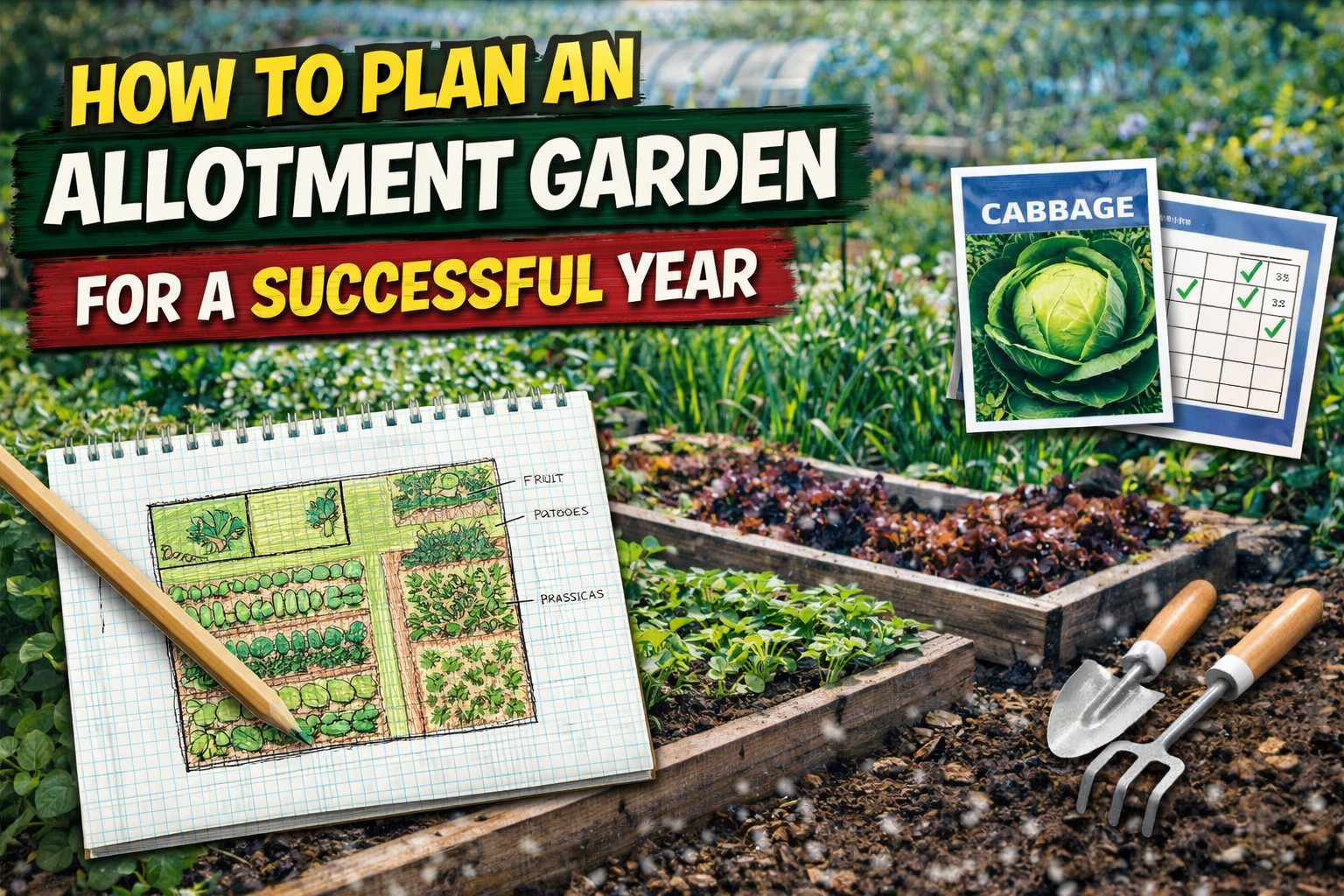
This video explains how to plan an allotment garden to create a productive and organised growing season. It shows how preparation and good layout decisions help improve harvests and reduce workload.
The guide covers choosing crops, spacing plants, crop rotation, scheduling sowing times and organising growing areas. It also explains how planning ahead helps avoid overcrowding and keeps the garden manageable.
If you want better results from your allotment or vegetable garden, this video provides practical beginner-friendly advice on planning and preparation for a successful growing year.
Show More Show Less View Video Transcript
0:00
Planning your a lotment and garden for
0:02
the year ahead. Welcome to Gardening
0:04
with Ben everybody. And today we're
0:06
going to be talking about planning for
0:07
the year ahead and crop rotation. Yes,
0:10
crop rotation is very important in an a
0:13
lotment and garden. And the reason why
0:16
we do crop rotation is because of pests,
0:20
diseases, and nutrients. as if you grow
0:24
say sweet corn in a bed and you've had a
0:28
fantastic crop from it, it'll have used
0:31
all the nutrients it needs for that
0:32
specific plant to grow a great crop from
0:36
it. So if you try and grow it again in
0:38
there, there might not be enough
0:39
nutrients for that plant in there for
0:42
that year. Or there may be diseases what
0:44
have been lingering around. Say if
0:46
you've grown potato and you've got
0:47
blight, it might be lingering around in
0:49
that bed and it will reactivate when it
0:52
gets warmer and you could lose the crops
0:56
and be devastated from losing it. So,
0:59
it's great to grow stuff in different
1:01
spots every single year. Obviously,
1:03
during the winter months, it's great to
1:05
add the nutrition back into the ground
1:07
by adding manure or doing the green
1:10
manure, what I see a lot of people
1:11
doing, and digging it into it. I've
1:13
never tried growing green manure, so it
1:14
might be worth something I try in the
1:16
future. But yeah, adding the nutrients
1:18
back into the ground at this time of
1:21
year. And if you grow say peas or runna
1:24
beans, they can add nitrogen back into
1:26
the ground. And the way they add
1:28
nitrogen back in is that when the pee
1:30
and the runna bee plant is finished,
1:32
don't dig up the roots. just snip them
1:34
off at the bottom, leave them in the
1:36
ground over winter, and that will add
1:38
the new nitrogen back into the ground
1:41
and help crops in future. So, that's a
1:44
great thing for the garden to do. So,
1:48
it's important to do the crop rotation
1:50
every single year down at the plot.
1:54
Also, another thing is plan your plot.
1:57
Now, it's hard to plant it sometimes
2:00
because you end up sewing too many seeds
2:02
or you end up buying more seeds like I
2:05
do or you get them free in magazines and
2:07
you're like, "No, where do I plant
2:08
that?" But it's great to draw a plan of
2:11
an idea of where you're going to be
2:13
growing stuff and what you want to grow.
2:15
Have a look in seed cataloges. There's
2:17
so many seed cataloges out at this time
2:19
of year. or go on gardening websites and
2:21
have a look at what seeds you want to
2:23
grow this year to give you an idea of
2:26
what you're planning on growing and draw
2:28
a plan of your a lotment. Like my plan,
2:30
my a lotment's pretty easy. I've got
2:33
like beds all laid in the right places
2:36
so I know what it looks like and how it
2:38
is. So, I could just draw a plan with
2:40
all the beds on and decide what I want
2:42
to grow in each bed. Obviously look at
2:45
which areas are shaded so that you don't
2:48
grow stuff in the wrong places and which
2:51
areas grow in which ones have the most
2:53
sunlight and yeah have a look at
2:56
instructions of what needs light and
2:58
what doesn't need light as much and
3:02
which areas are probably more damper
3:03
than the others or which areas dry out
3:06
faster and have a look at all that. So,
3:09
in a horrible day like today when it's
3:12
raining, it's snowing, get sat down, get
3:15
yourself a brew, get yourself a
3:17
gardening program on and draw a plan of
3:20
your a lotment and decide what you want
3:22
to grow, where and when. And every
3:24
single year, I like to grow something
3:26
new down at the plot, something that
3:28
I've not grown before. And often with
3:30
these gardening magazines, you get seeds
3:32
that you probably wouldn't go out and
3:33
buy, and you think, "What the hell is
3:35
that? I would never try and grow that."
3:37
But I've learned from that. I once got
3:39
some purple cauliflowers from one of the
3:41
magazines. I thought, "What?" And I
3:44
tried them and they grew better than the
3:46
white ones down at my plot. So, ever
3:48
since then, I've grown purple
3:49
cauliflowers and I've had great produce
3:51
from them. And that is one thing I need
3:53
to put on my list for this year to go
3:54
and get some more. But there's also some
3:56
yellow ones. So, I might try them this
3:58
year as well. So, it's great to
4:00
experiment and try different things that
4:01
you wouldn't often try or buy from the
4:04
supermarket. So have a look around, draw
4:07
your plan, and get ready for this year's
4:09
growing season, everybody. And as
4:11
always, remember, keep smiling, keep
4:13
shining, and keep gardening. by
4:15
everyone.
Hobbies & Leisure
Home & Garden
Home & Garden