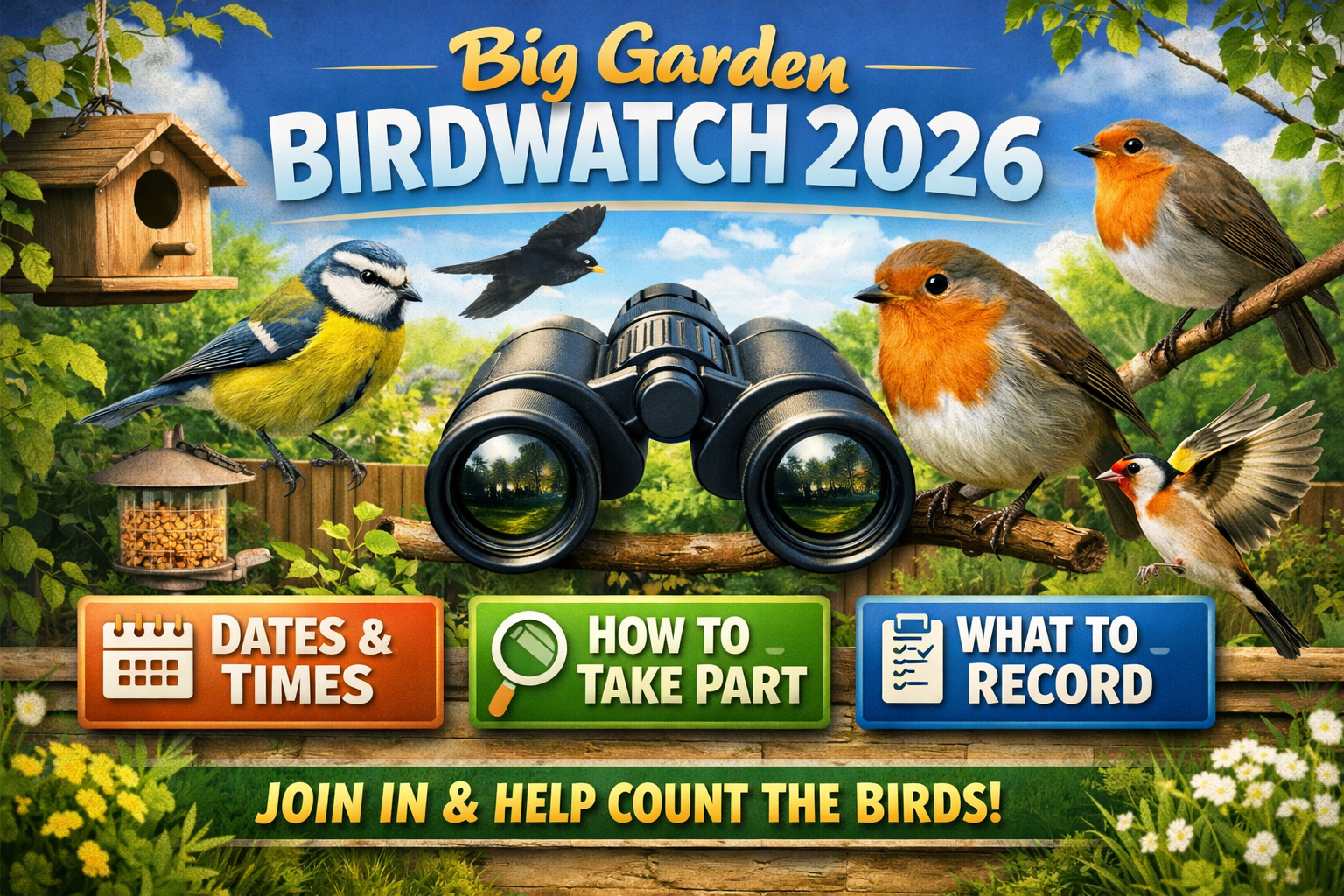
Big Garden Birdwatch 2026 – Dates, How to Take Part and What to Record
The Big Garden Birdwatch (BGBW) is the UK’s biggest annual wildlife survey, organised by the RSPB to help track the health of bird populations across the country. Each year, tens of thousands of people — from complete beginners to dedicated birdwatchers — step outside for one hour to count the birds they see or hear in their gardens, balconies, parks or local outdoor spaces. The data you submit helps scientists and conservationists understand long-term trends in bird populations, highlight species under threat and guide conservation efforts across the UK.
Keter Manor Outdoor Apex Double Door Garden Storage Shed (6 x 8ft)
A durable and stylish beige and brown garden storage shed perfect for storing garden tools, equipment, bikes, and outdoor essentials. Weather-resistant, low maintenance, and ideal for any garden or allotment setup.
Seed Trays & Propagation Kits
View Seed Trays
Heated Propagators & Grow Lights
See Grow Lights
Seed Compost for Healthy Seedlings
View Compost
⭐ Recommended Products — Bird Care: Feeders, Food, Houses & Tables
• Garden Bird Feeder (Hanging or Seed Feeder)
A sturdy outdoor feeder that holds a mix of seeds to attract a variety of wild birds. Easy to hang from trees, hooks, or poles and great for year-round feeding.
👉 Click here to see top options
• Bird Food & Seed Mixes
High-energy feeds like sunflower hearts, mixed seeds, and peanut pieces that help birds thrive — especially in colder months when natural food is scarce.
👉 Click here to see top options
• Bird Table / Feeding Station
A classic garden bird table provides a sheltered platform for seed, mealworms, and suet — perfect for attracting robins, tits, finches, and more.
👉 Click here to see top options
• Bird House / Nest Box
Provides safe, sheltered nesting spots for wild birds in spring and summer. Choose a variety suited to UK garden birds for best results.
👉 Click here to see top options
• Bird Bath / Water Feature for Birds
A shallow water source that invites birds to drink and bathe — essential for bird health, especially in dry or cold weather.
👉 Click here to see top options
This guide explains when Big Garden Birdwatch 2026 takes place, how to take part, what to record, and best tips to make your count as accurate and enjoyable as possible. Whether you’re joining your first count or looking to improve your skills, this article gives you everything you need to know.
🗓 Big Garden Birdwatch 2026: Key Dates
Big Garden Birdwatch 2026 runs over a long weekend in late January, giving you flexibility to choose the best time that suits your schedule and weather conditions. The core dates are:
📅 Saturday 24 – Monday 26 January 2026
During this period you can pick one hour to watch and count the birds in your chosen outdoor space. The RSPB usually opens data submission shortly before the event and keeps forms open for a few weeks afterwards so you can enter your count.
The January timing is deliberate: it’s when garden birds are most visible and reliant on food sources, making trends easier to interpret.
🐦 How to Take Part in Big Garden Birdwatch
Taking part is simple and designed to be accessible for all ages and experience levels — kids and adults alike can enjoy the count.
1. Choose Your Spot
Pick a place where you can see as much of your garden or outdoor space as possible — this could be:
- Your garden
- A balcony or patio
- A communal green area near home
- A local park or outdoor space
Even small outdoor areas can be great for counting birds.
2. Pick One Hour
During the weekend of 24–26 January, set aside one hour when you can observe without interruption. It doesn’t need to be long — just one focused hour of watching and recording.
3. Get Ready
Some simple preparation makes your count easier:
- Put out bird feeders, nuts, seeds or suet if you normally feed birds
- Settle into a comfortable spot with a notepad or recording sheet
- Have a pair of binoculars and bird ID guide (or app) ready if you have them
You don’t need to be an expert — even basic sightings help scientists.
4. Watch and Record
During your chosen hour, watch for birds and note down how many of each species you see or hear. Record only distinct individuals, not repeats of the same bird flying in and out unless you can be sure they’re different.
5. Submit Your Count
After your hour is complete, submit your results via the RSPB website or official Big Garden Birdwatch app. You’ll be guided through simple questions to enter:
- Where you counted
- How long you spent (1 hour)
- The highest number of each species you saw at one time
Once submitted, your data helps build a national picture of bird populations.
📝 What to Record: Birds and Behaviour
During your Big Garden Birdwatch hour, your focus should be on species identification and counts. Record:
✔ Species Seen
Note each bird species that visits or is visible in your space. Common garden birds include:
- Robins
- Blackbirds
- Blue tits and great tits
- Sparrows (house and tree sparrows)
- Starlings
- Wood pigeons
- Finches (chaffinch, goldfinch)
Even unusual or rare visitors should be recorded if you can identify them.
✔ Number of Birds
For each species, record the largest number of individuals seen at any one time during your hour. For example, if you see small groups of blue tits repeatedly but at one point see 8 together, enter “8”.
✔ Bird Activity (Optional but Helpful)
If you want to go a step further:
- Note whether birds were feeding, bathing, perched, chasing, calling, etc.
- This kind of behaviour data enriches understanding but is not required for basic submission.
✔ Environmental Notes
You can also add optional context like:
- Weather conditions
- Whether you had feeders out
- Habitat notes (trees, shrubs, water sources)
These details help scientists interpret patterns, though the core requirement is species and count.
🦆 Common UK Garden Birds to Look For
You might spot a mix of garden favourites and seasonal visitors during your count. Common birds include:
- Robins – distinctive orange breast
- Blackbirds – sleek, dark plumage (males) and brown flecked females
- Tits – small, busy birds at feeders
- Sparrows – chirpy, social species
- Starlings – speckled in winter, noisy in flocks
- Finches – colourful and melodic
- Pigeons and doves – larger, calm visitors
The exact mix depends on your location, habitat and weather, but all sightings contribute valuable data.
🧠 Tips to Improve Your Birdwatch
Even if you’re new to birdwatching, you can get the most out of your Big Garden Birdwatch hour with a few simple tips:
📘 Prepare Your ID Tools
Carry a bird identification guide or smartphone app to help confirm species. Apps often include calls, which help identify birds by sound.
🔭 Use Binoculars if You Have Them
A pair of binoculars can help you see more detail and distinguish between similar species.
📍 Choose a Quiet Spot
Settle where you’re less likely to be disturbed — birds are more likely to be visible when people and pets are calm nearby.
🍗 Put Out Food in Advance
If you normally feed birds, put food out a day or two before the count so birds know where to come during your hour.
☁️ Be Patient
Birds may take a few minutes to arrive. Give it time — some species show up later in the hour.
❓ Why Big Garden Birdwatch Matters
Your participation in Big Garden Birdwatch does more than fill a weekend hour — it contributes to one of the longest-running citizen science projects in the UK. The data helps:
- Track population trends of garden birds across decades
- Identify species that are increasing or declining
- Inform conservation priorities and policy
- Understand how habitat changes and climate affect birdlife
Even small gardens in towns and cities add valuable information to this national picture.
🏁 Final Thoughts
Big Garden Birdwatch is an easy, rewarding way to connect with nature and support bird conservation. Whether you’re a seasoned birder or a complete beginner, your count helps scientists understand the UK’s bird populations and supports efforts to protect them for future generations.
Make a note of 24–26 January 2026, pick your best hour, and enjoy watching the birds in your outdoor space — every sighting counts!